Build a new case
The body, lid, current screen module, patterns, firmware and complete build guide in one matched set.
Download projectReal dice. Paper notes. Offline character tracking, built into your case.
Open source. Free forever.
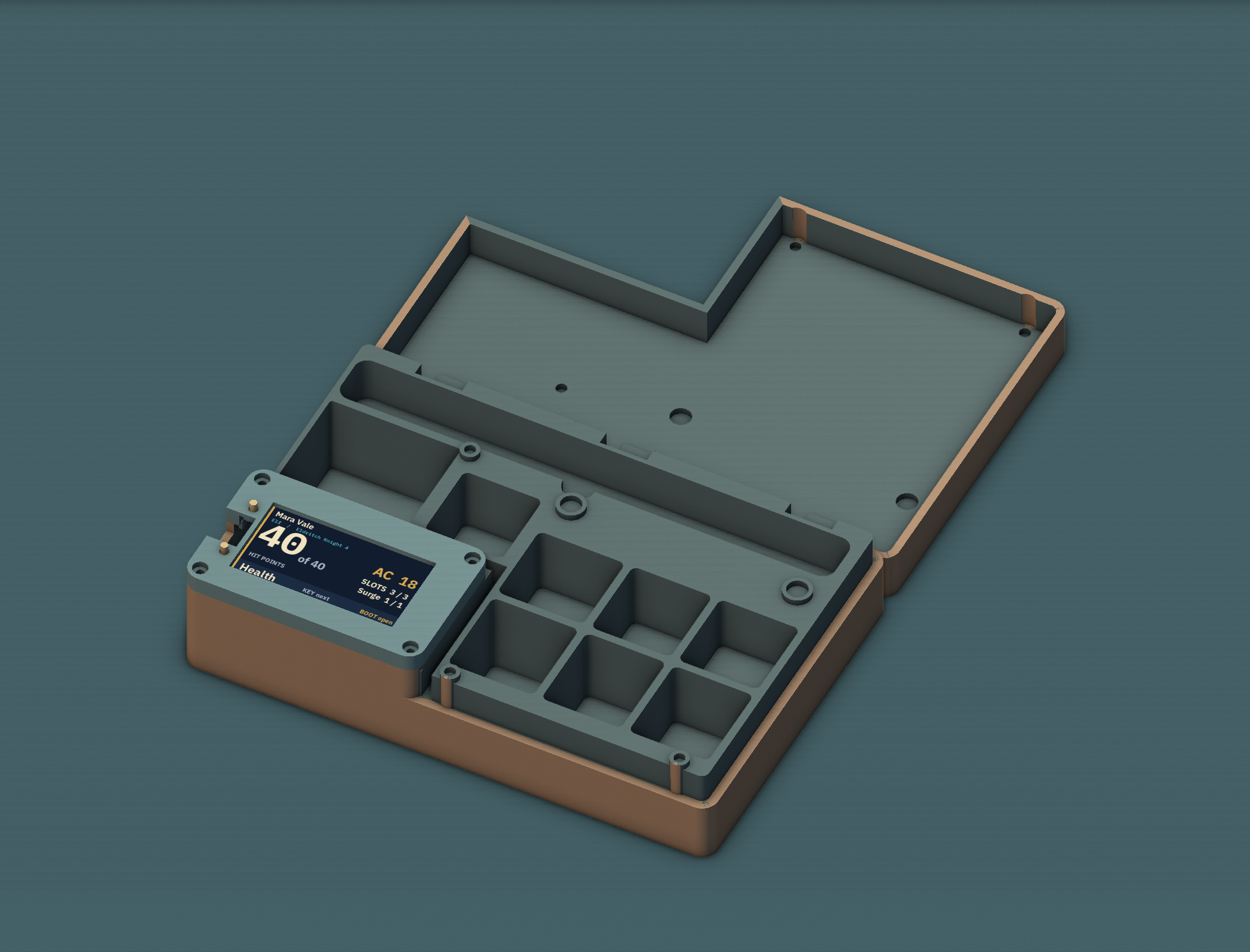
Dice, miniature, pen. Everything at the table, in one case.
The removable lid flips into a magnetically docked rolling tray. Both pieces rest on the table.
Seven dice pockets and dedicated storage. Check the pocket dimensions against your own pieces.
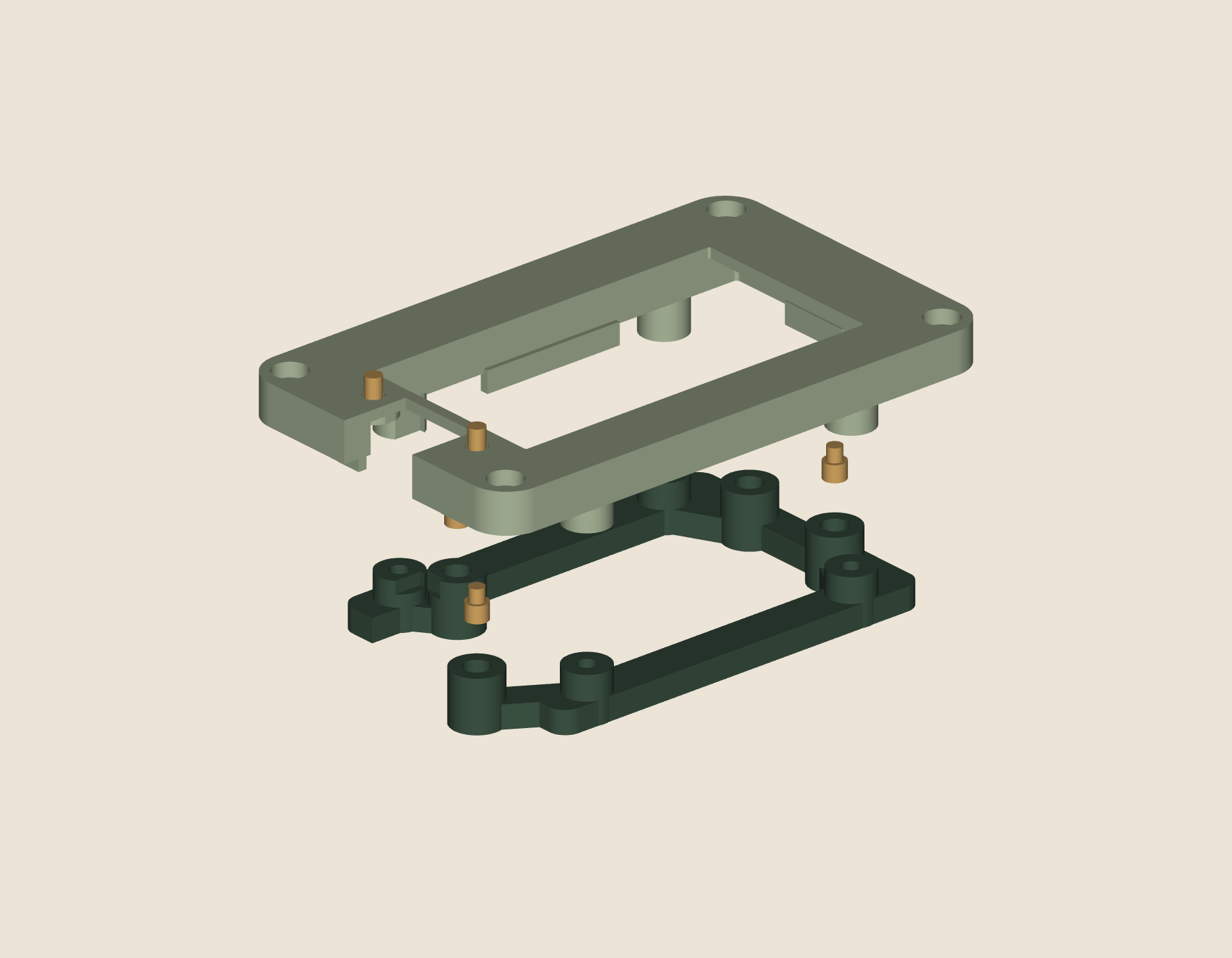
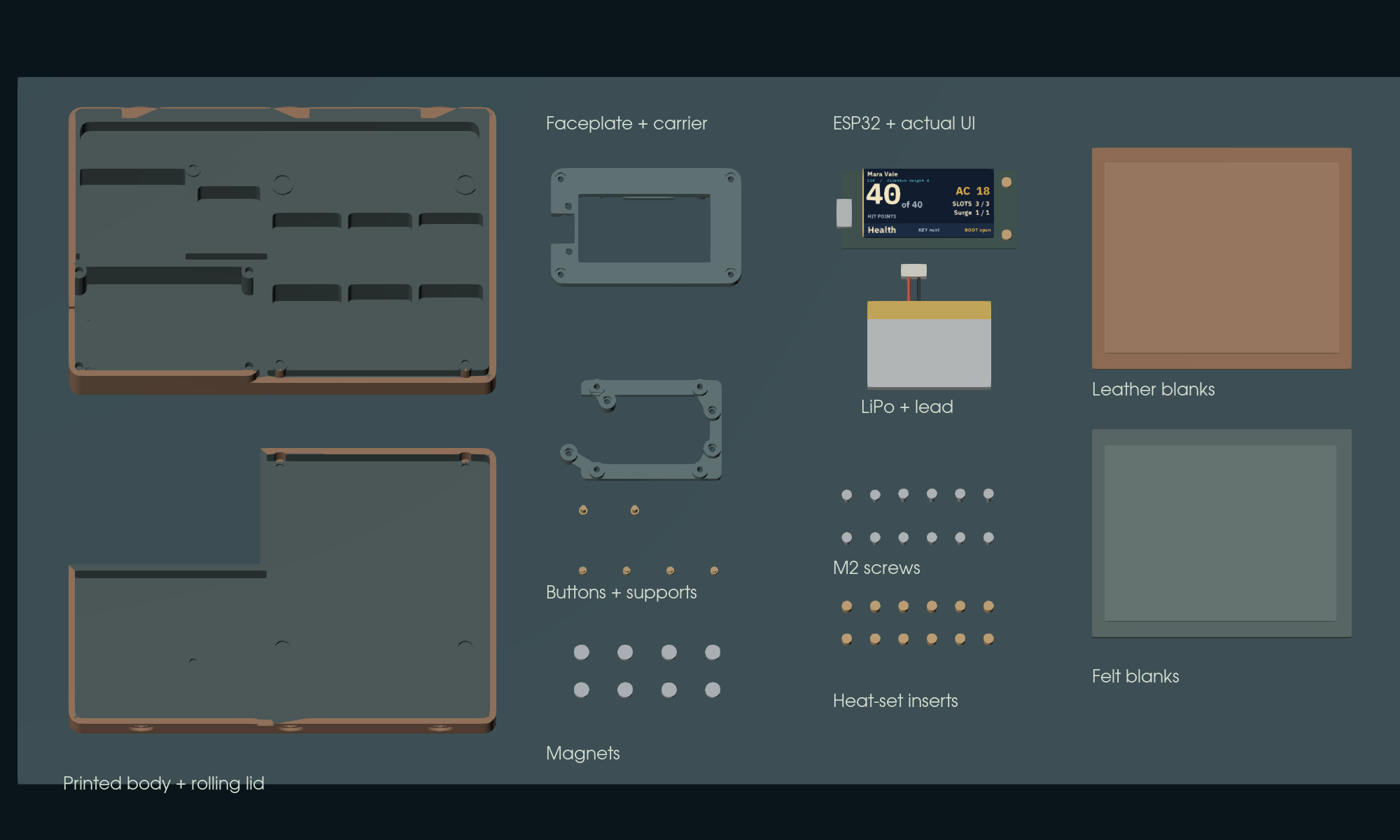
A removable faceplate and four adjustable insulating supports keep the electronics serviceable.
Connected wrap patterns cover the lid and base. The screen surround stays painted.
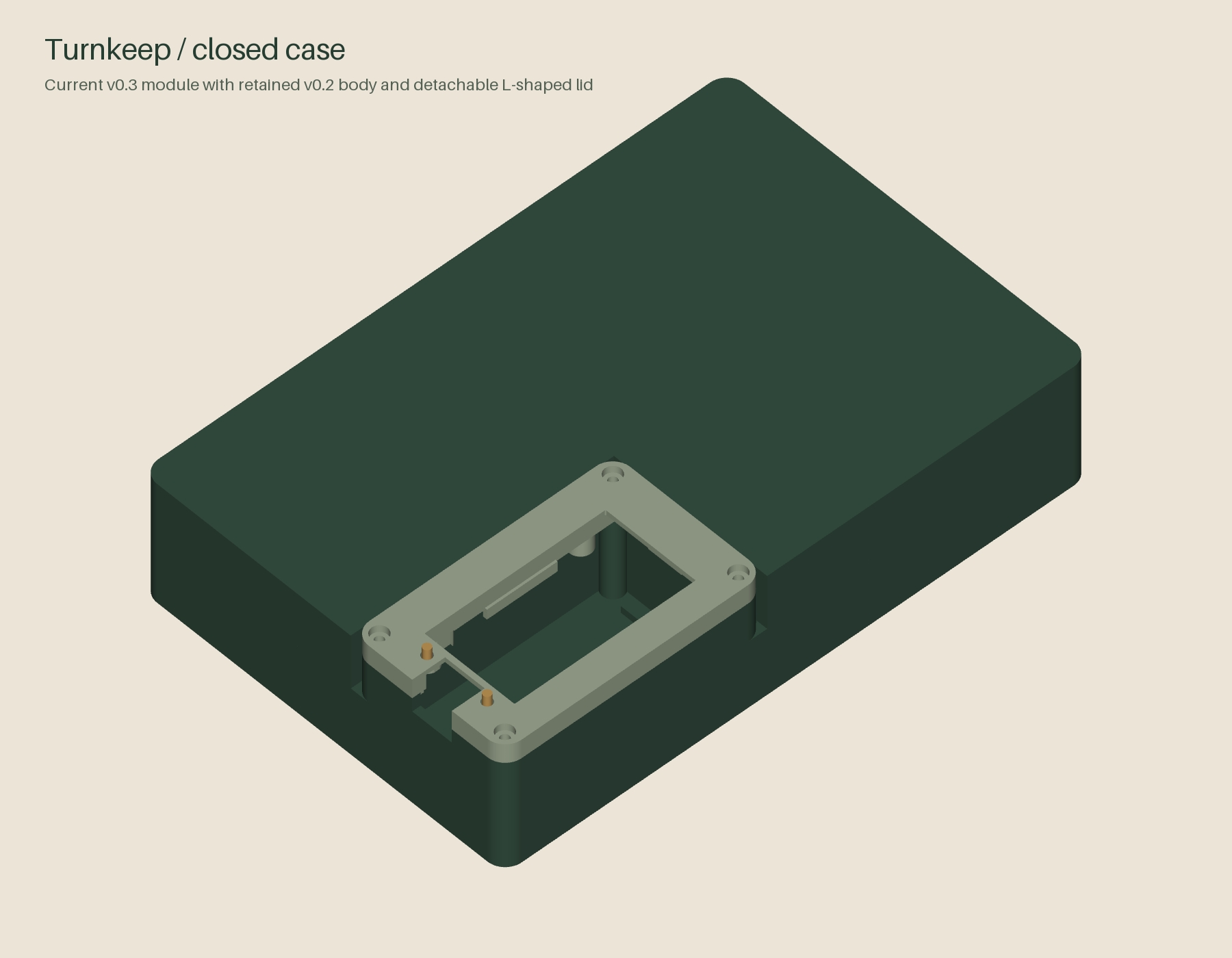
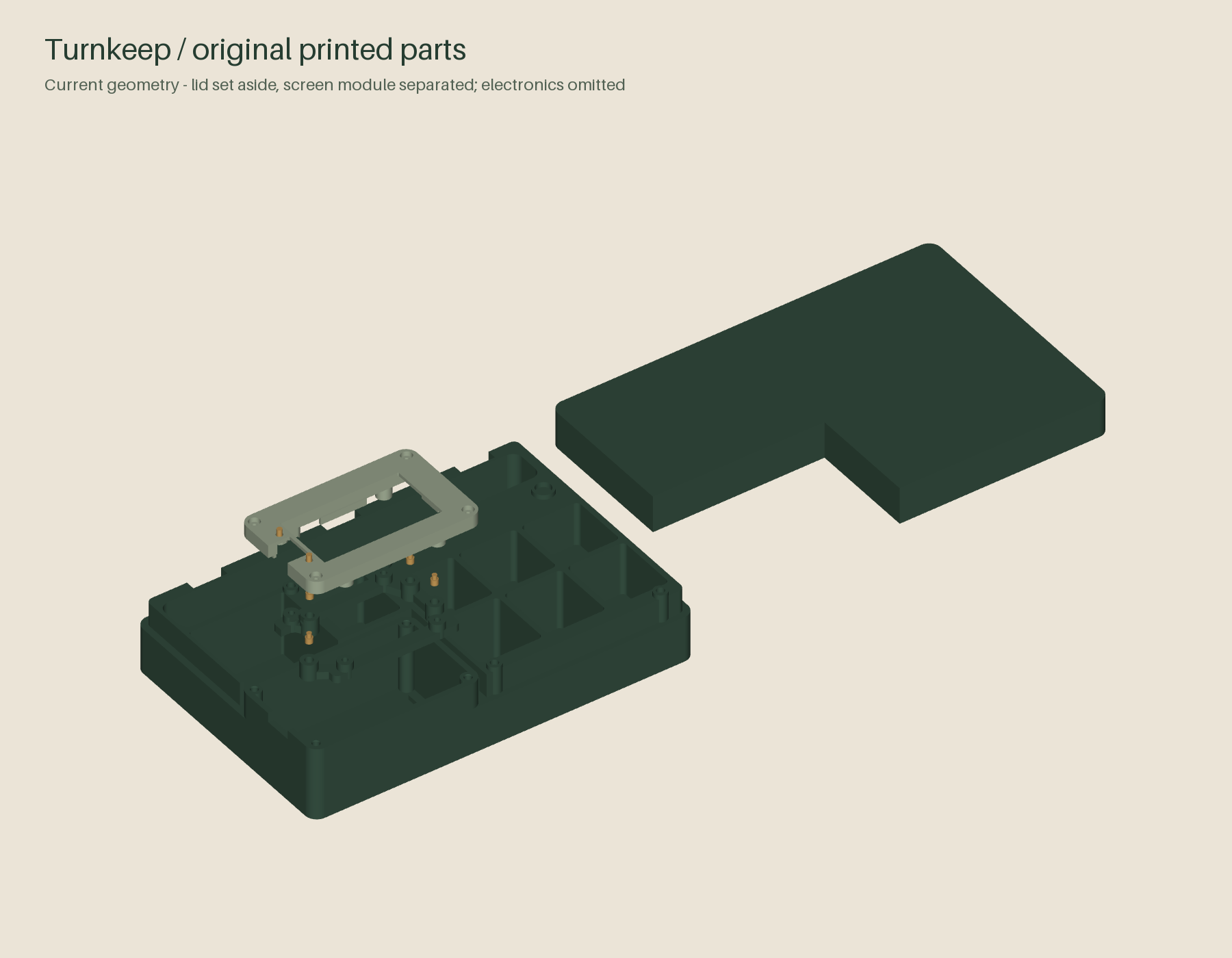
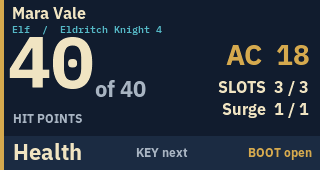
Two buttons for health, actions and resources. Works offline; keeps your counters through sleep.
Actual simulator capture using a synthetic character. Phone setup is planned; battery runtime has not been measured.
Import before play. Sync after. Try the setup concept.
The proposed setup screen shows a QR code. Your phone opens a local pairing flow for your Turnkeep.
Paste a D&D Beyond character link or photograph your paper sheet. Review the important fields before anything reaches the box.
Put the phone away. Keep real dice and paper in the game; let Turnkeep track the small things.
After the session, export changes. When you level up, review an updated sheet and replace the character on the device.

Open here, or scan from another device.
Open the setup prototypeSample character only. Beyond import, photo recognition and device sync are not connected yet.
Print, assemble, finish. Start with the fit checks: this is experimental hardware.
Check the exact board, battery connector and polarity. Use the hardware bill of materials. Battery model, capacity, polarity and supplier pricing still require your own verification.
Building from scratch and repairing an existing case use different packages. Keep each set together.
Test your inserts, magnets and moving parts before committing to a full print.
Confirm seating and independent button movement. Never use the screws to bend the board into place.
Trial-fit the two exterior paper nets at 100% scale, then test a scrap of the actual covering material.
Install heat-set inserts with electronics and battery removed. Support-adjustment screws push insulating tips; metal must not touch the PCB. Stop at first light contact. Preserve USB and removable-deck service access. Sleep is software sleep, not battery disconnection.
Read the hardware assembly guide and bill of materials before printing or powering the case.
These links search AliExpress for each specification. Listings, variants, prices and shipping change; no seller or exact listing has been qualified. Check dimensions and quantities before ordering. No affiliate links.
| Material | Quantity / size | Check before buying | Source |
|---|---|---|---|
| LilyGo T-Display-S3 | 1 · 1.9-inch ST7789, non-touch | Choose the original non-touch version, not AMOLED, Pro or a different panel. | Search AliExpress |
| Protected LiPo battery | 1 · envelope ≤57 × 39 × 8 mm | Exact cell, connector and polarity are not selected. Measure and verify against your board before ordering. | Search AliExpress |
| M2 heat-set inserts | 12 · length 4 mm, outer diameter 3.2 mm | Eight module inserts plus four body inserts. | Search AliExpress |
| M2 × 8 mm screws | 8 | Four case fasteners plus four support adjusters. | Search AliExpress |
| M2 × 10 mm screws | 4 | Carrier mounts. | Search AliExpress |
| 6 × 2 mm disc magnets | 10 | Closure and docking; dry-fit polarity before gluing. | Search AliExpress |
| 3 × 2 mm disc magnets | 6 | Closure magnets. | Search AliExpress |
| PLA / PLA Matte | 1 spool · 1.75 mm | Printer/material tolerances need coupon testing. | Search AliExpress |
| Felt | 2 mm sheet | Pocket floors; editable templates included. | Search AliExpress |
| Exterior PVC covering | Optional · 1 mm sheet | Two-piece exterior pattern is provisional; trial-fit paper first. | Search AliExpress |
| Adhesive | For magnets and coverings | Select adhesive compatible with your chosen printed material and covering. | Search AliExpress |
| Soft battery pad | Thin, nonconductive sheet | Support the cell gently; preserve clearance and avoid compression. | Search AliExpress |
Useful tools: temperature-controlled iron with insert tip, calipers, matching screwdriver and cutting tools. Use the fastener head you actually buy. A 3D printer with a 180 mm build envelope is required.
Initial assembled orientation, navigation, sleep and wake on both buttons have passed with HP retained. Repeated cycles, inaccessible-reset recovery, battery endurance, standby current and thermal tests remain open. Published recovery instructions must be verified on the named board before a ready-to-flash package ships.
Print it, inspect it, change it. Editable sources belong beside the finished exports.
Experimental release · Body/lid v0.2 + screen module v0.3 · Source and exports included
The body, lid, current screen module, patterns, firmware and complete build guide in one matched set.
Download projectKeep the body and lid. Replace the faceplate, carrier, two buttons and four insulating supports together.
Open the matched hardware files →| What you need | Formats | What it includes | Status |
|---|---|---|---|
| Print the case | STL | Matched body, lid and v0.3 module | Open source ↗ |
| Edit the design | STEP / Python | Original parts and parameter sources | Open source ↗ |
| Build the firmware | C / JSON / Python | Board project, simulator and pack tools | Open source ↗ |
| Cut the covering | PDF / Python | Two connected exterior wrap nets | Open source ↗ |
| Explore the details | Images / documentation | Actual geometry, assembly and known limits | Open source ↗ |
Every release: version, compatibility, file sizes and checksums.
The design keeps evolving, and this page evolves with it. These future form studies explore more space for the things that matter.
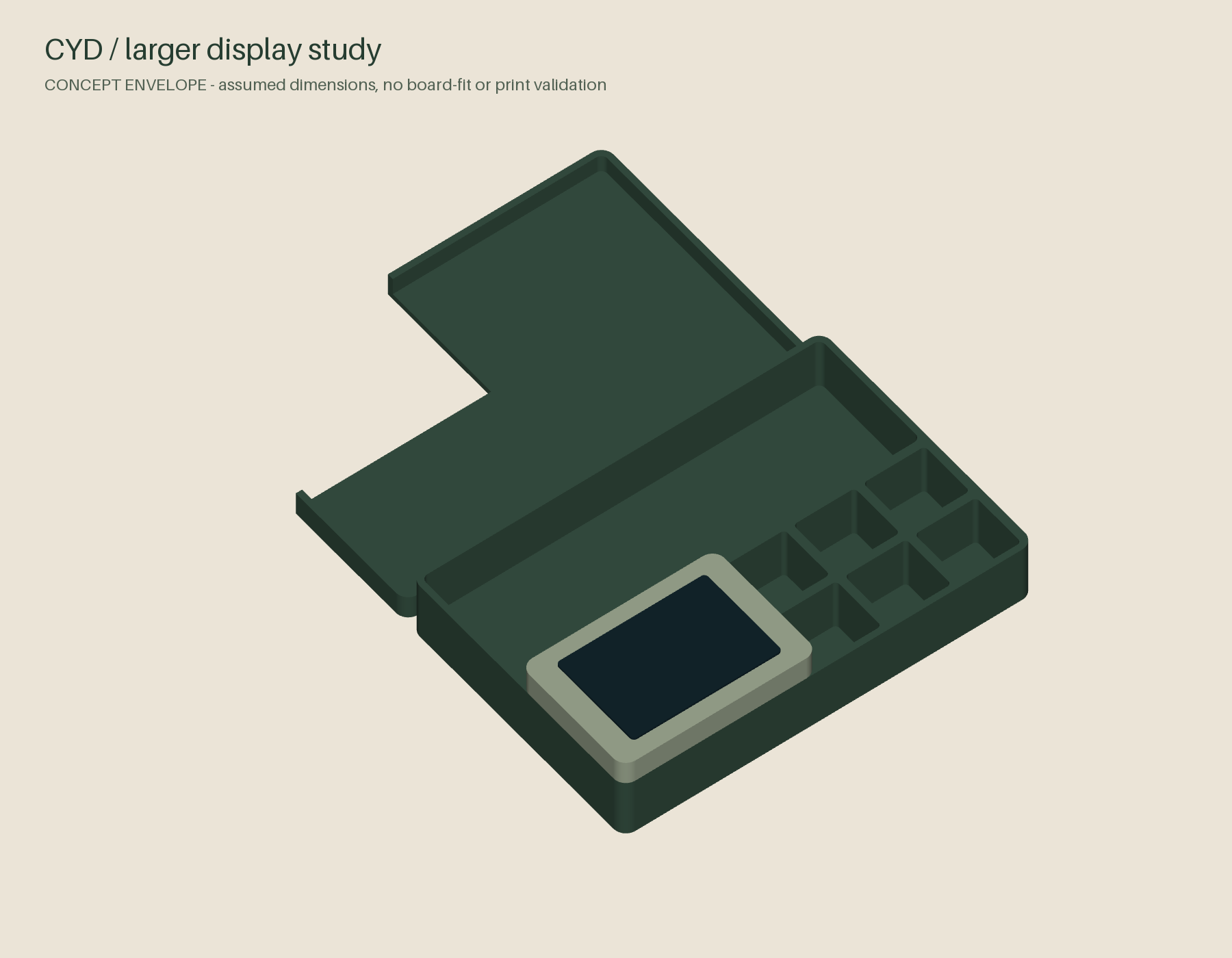
A larger color-display concept, with room to see more at a glance. Enclosure and display placement study only; electronics and fit are not validated.
Explore the concept CAD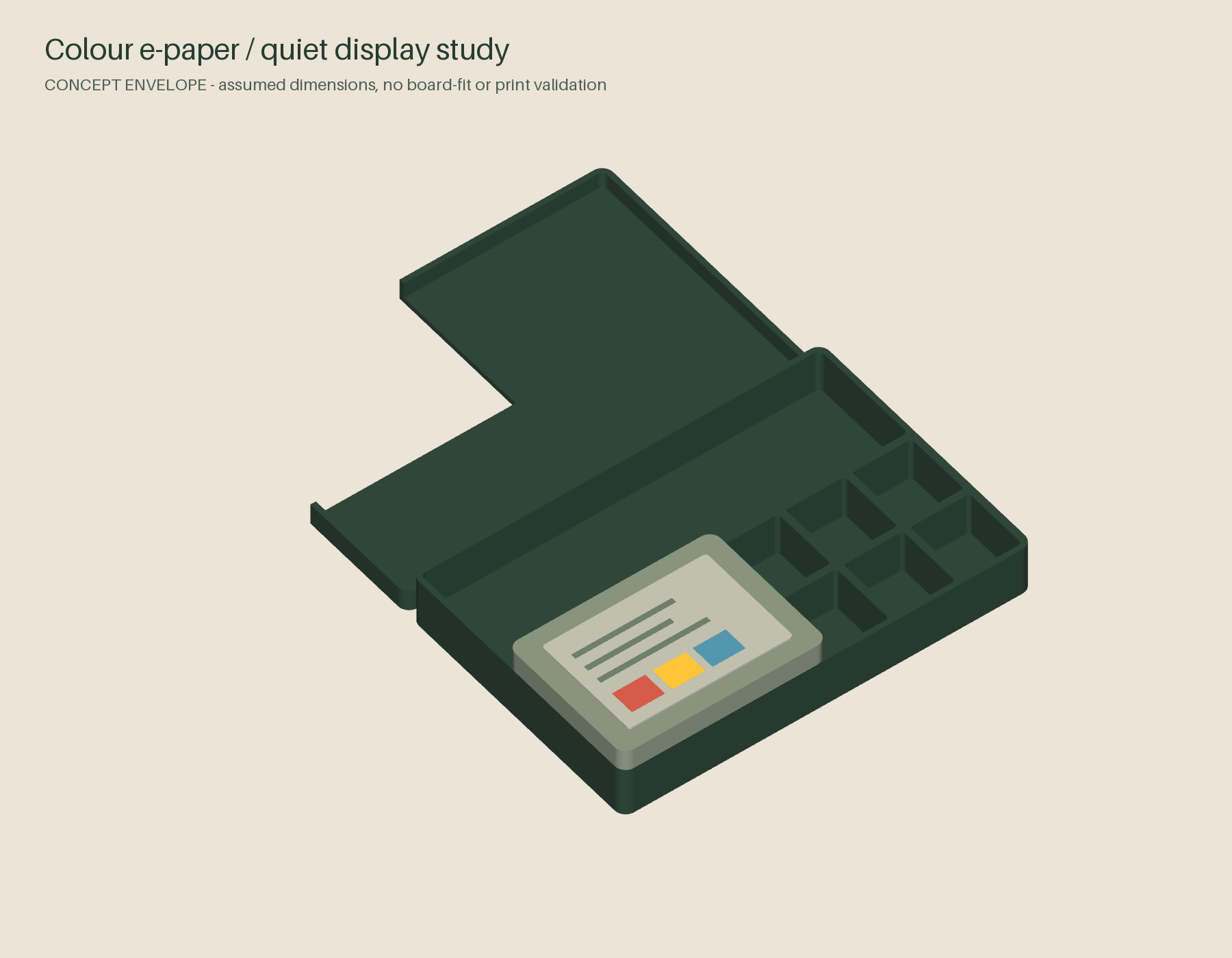
A colour e-paper direction for a quieter companion. Panel selection, refresh behavior, power and enclosure fit remain open.
Explore the concept CAD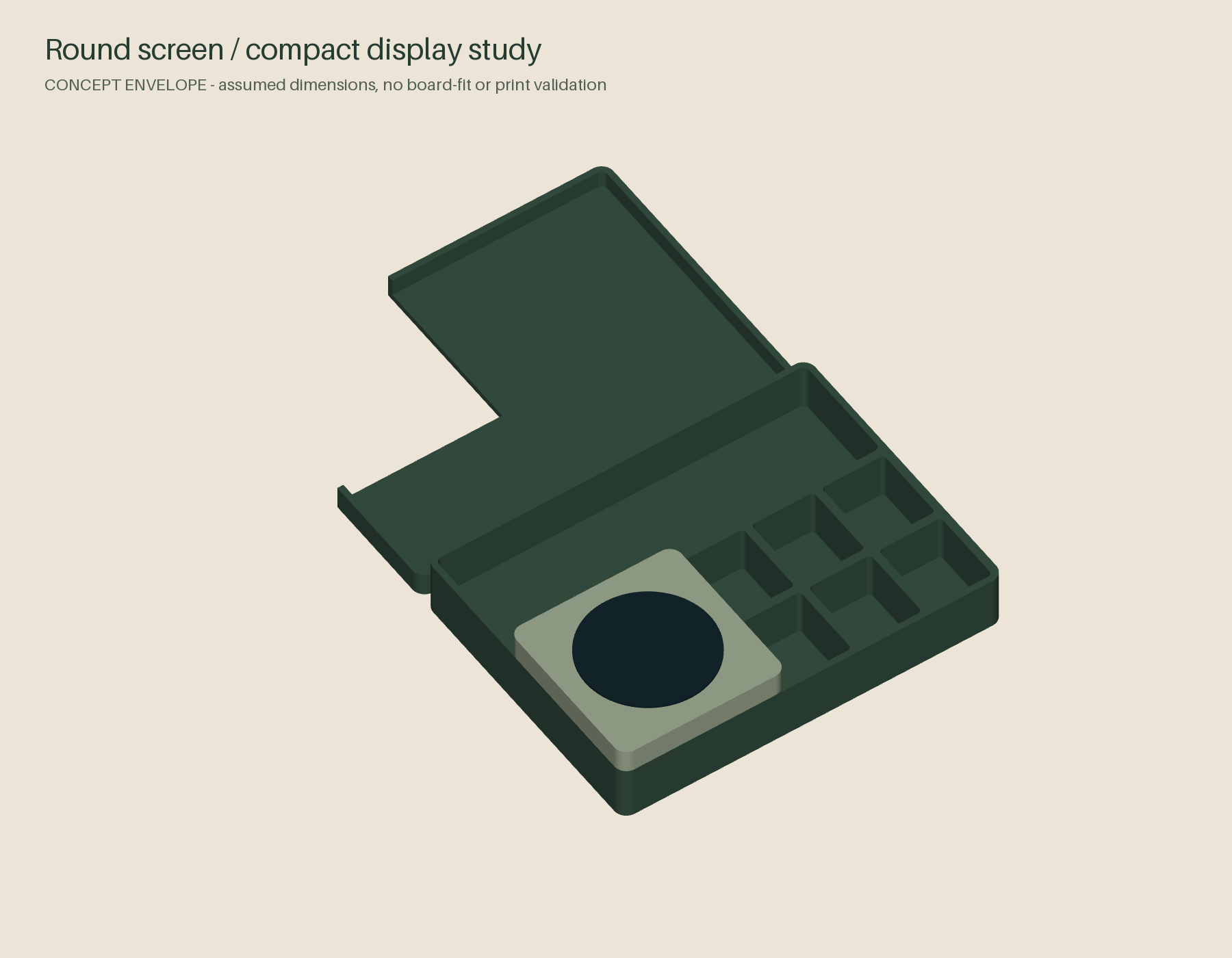
A compact circular view of the essentials. A quick form study for a future storage system; board, controls and readable interface still to be developed.
Open the round-display concept filesConcept CAD is shared for exploration. It is not part of the matched v0.2 / v0.3 printable case release.
An evolving storage system for nerds, for when your hobby is building things for your hobbies.
Bring your character in. Validate the essentials, review uncertain fields and put a trusted pack on the current device. D&D Beyond and photo import are the intended routes.
More display space for the same offline companion. Select the board, engineer the fit and prove the build at a real table.
Boot, scan, review and transfer. After play, export changes; when you level up, replace the sheet deliberately. Real device pairing is next work.
Custom assembled, tested boxes and build-it-yourself kits. Final kit contents, pricing, lead times and ordering follow a repeatable physical build.
A quieter, paper-like display. Explore refresh, readability and power before turning the concept into a supported case.
A different shape for the essentials. Explore a compact circular interface and another way to keep your hobby together.
Development order, not release dates. Read the milestones and acceptance checks.
From free files to a custom build. Choose your starting point.
Make it. Modify it. Copy it. Reinvent it. Make it yours.
The files, firmware and build guides stay free. Fork the project, inspect the geometry or improve a build step. This website grows with the design.
Custom assembled boxes and build-it-yourself kits are coming soon. Explore the options.
Optional support for the project. Not a preorder or payment for a box or kit.
The character interface runs on the assembled display. Navigation, sleep and both wake buttons passed initial checks. The public pack tool validates JSON and generates the compiled character data; the included example is synthetic.
The matched v0.3 repair replaces a screen assembly that did not seat reliably. Geometry checks pass; physical fit acceptance remains open.
One for the lid, one for the base. The PDF is generated and checked; paper and material trials come next.
Measure the finished case and power behavior, validate recovery and record a complete tabletop session before making stronger claims.