Jarvis
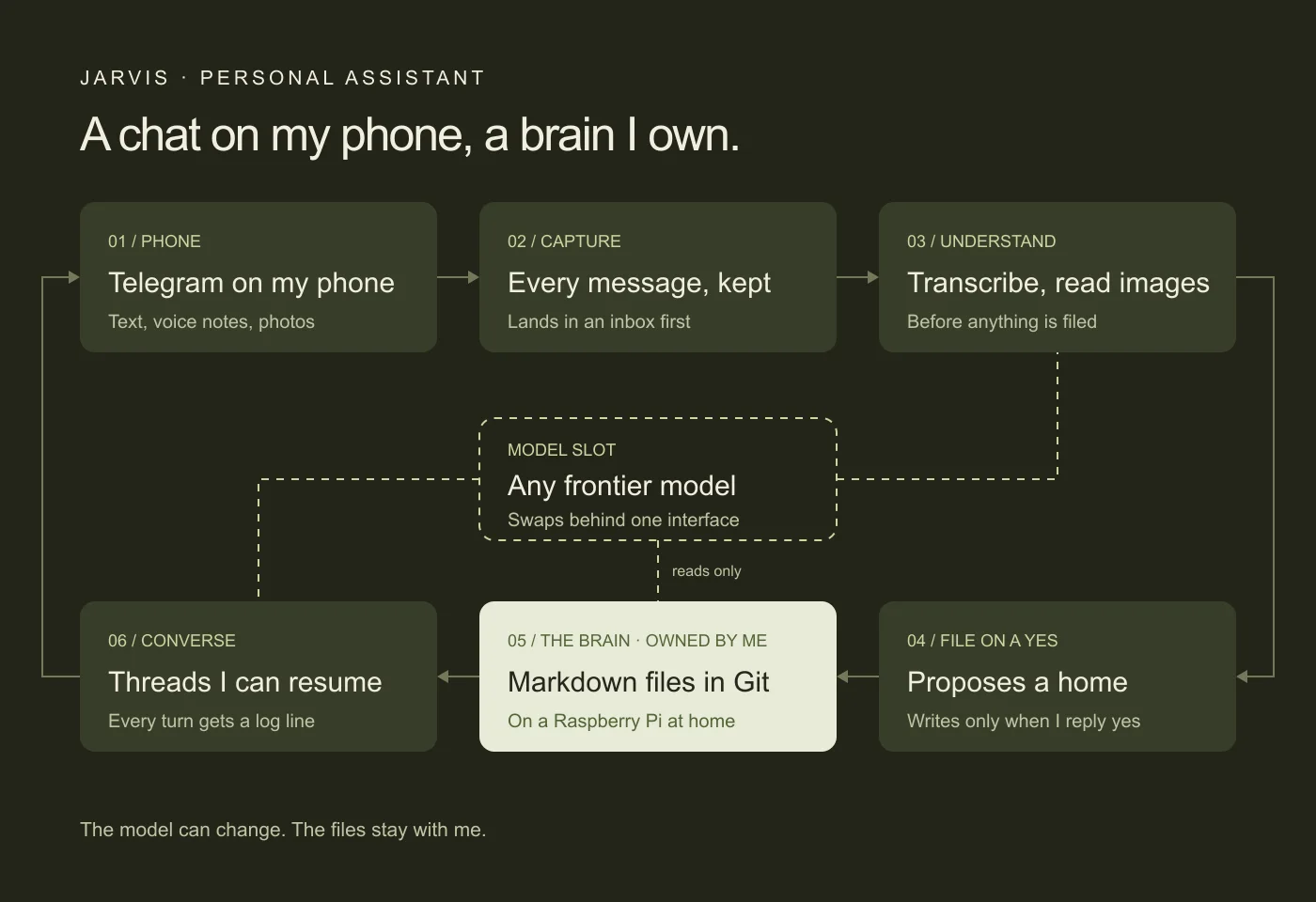
Image description
A loop runs from Telegram on my phone to an inbox that keeps every message, then to transcription and image reading, then to filing only when I reply yes, then to the brain of Markdown files in Git on a Raspberry Pi at home, then to conversation threads that return to the phone. A dashed model slot in the middle reads the brain only and can hold any frontier model.
Jarvis is my personal assistant on Telegram. It runs on a Raspberry Pi at home that also holds my second brain as plain Markdown files under Git. Version 1 has run since August 2026. It keeps everything I send, transcribes voice notes with Whisper and answers questions from the whole brain inside a read-only sandbox. Version 2 makes it two-way. It reads photos, transcribes recordings, keeps each conversation as a page, suggests where a note belongs and files it only when I reply yes.
How Jarvis works.
Version 2 is in development, October 2026.
What it does
I send Jarvis a text, a voice note or a photo on Telegram, and it transcribes the audio, reads the image and suggests the page where it belongs. It answers questions from my notes inside a read-only sandbox and files nothing until I reply yes.
What stays with me
My notes, each conversation page and a log with a line for every turn are plain Markdown files under Git, on a Raspberry Pi at home. The model reads them for a turn and never holds the only copy.
Why it’s model-agnostic
Jarvis talks to the model through one narrow seam, and today OpenAI’s Codex CLI sits behind it. If I switch models, the tools, the notes and the conversation pages stay where they are.
A closer look
1 view · From the project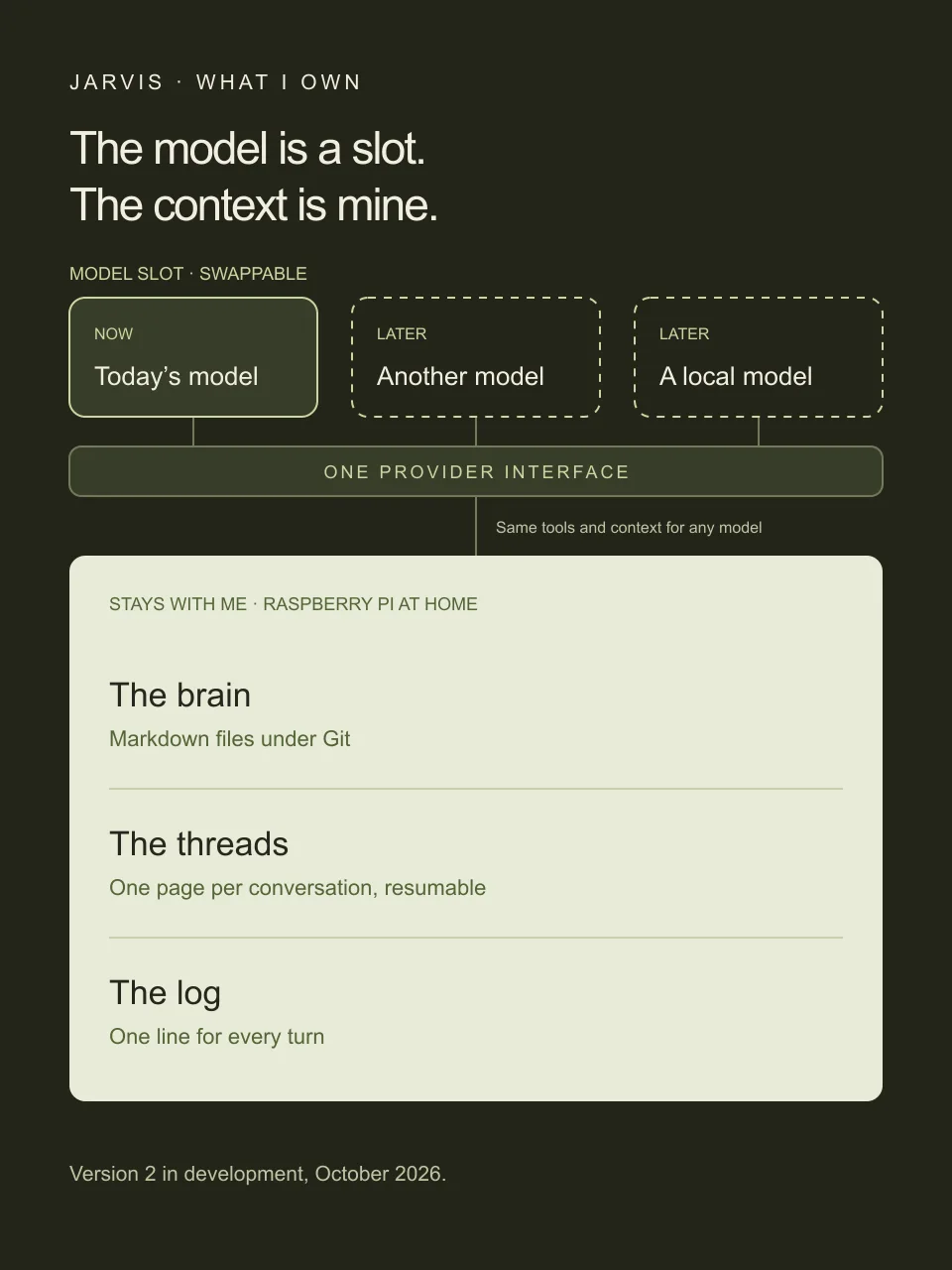
Image description
Three model slots sit above one provider interface: today's model, another model and a local model. Below the interface, a block marked as staying with me holds the brain as Markdown files under Git, one page per conversation and a log with one line per turn, on a Raspberry Pi at home.